
ATS School
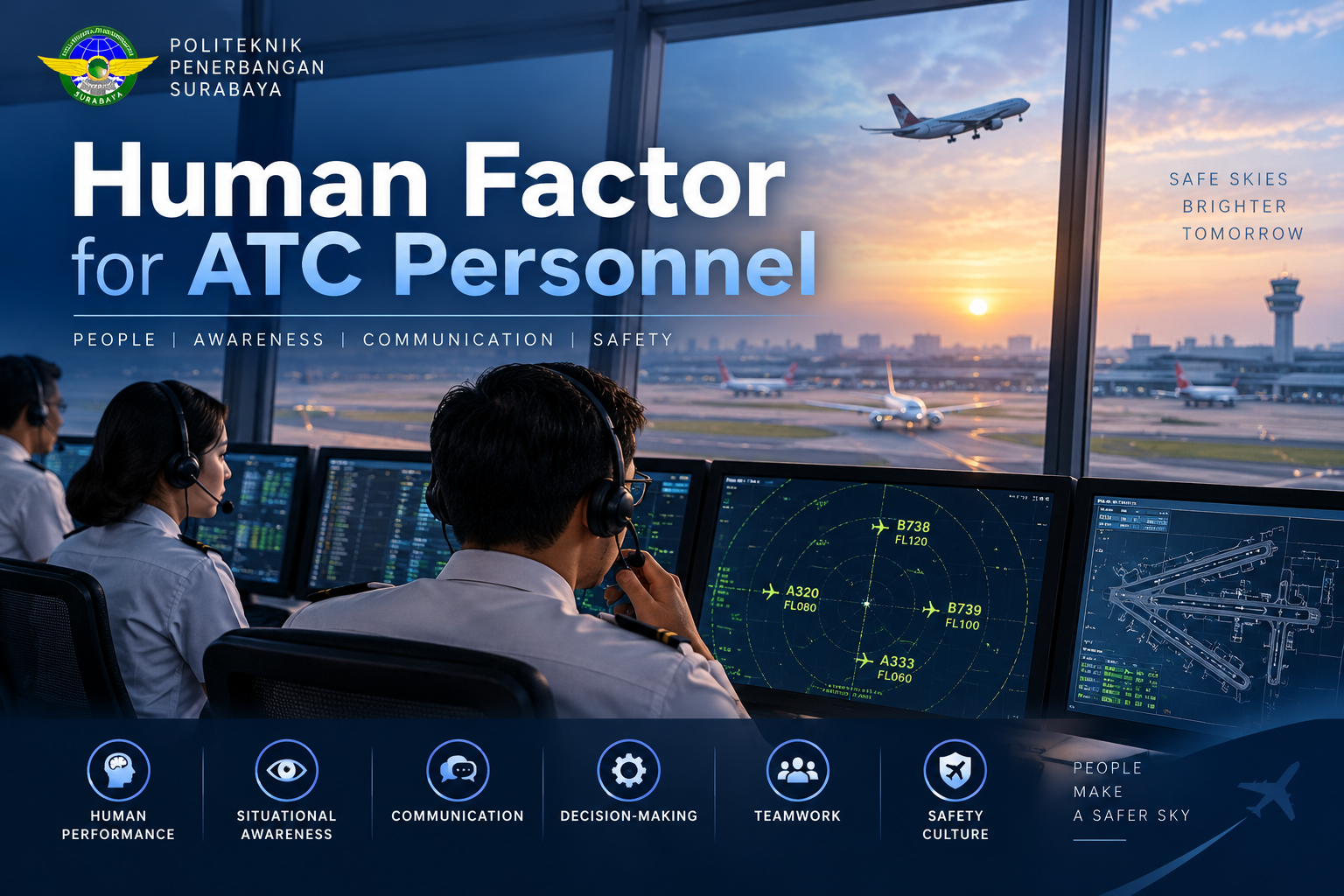
Human Factor for ATC Personnel
HF-ATC-2026
Goal
This course is designed to enhance the understanding of human factors among Air Traffic Control personnel and to strengthen their ability to recognize, manage, and mitigate human performance limitations in operational environments. The course emphasizes situational awareness, communication, teamwork, decision-making, workload management, fatigue, stress, and safety culture to support safe and effective air traffic services.
Learning Objectives
Upon successful completion of this course, participants will be able to:
- Explain the fundamental concepts of human factors and human performance in Air Traffic Control operations.
- Identify common human performance limitations that may affect operational safety.
- Apply effective communication techniques in routine and abnormal operational situations.
- Recognize factors that influence situational awareness and decision-making.
- Explain the effects of workload, stress, fatigue, and distraction on ATC performance.
- Apply teamwork and coordination principles in air traffic service environments.
- Identify human errors and contributing factors in operational events.
- Apply practical strategies to reduce human-factor-related risks.
- Support the development of a positive reporting and safety culture within the organization.
Structure
- Module 0: Course Introduction
- Course overview
- Learning outcomes
- Human factors in aviation safety
- Module 1: Introduction to Human Factors
- Human performance and limitations
- Human capabilities in ATC operations
- Human–system interaction
- Module 2: Situational Awareness
- Perception, comprehension, and projection
- Loss of situational awareness
- Maintaining situational awareness under pressure
- Module 3: Communication
- Effective operational communication
- Communication barriers
- Miscommunication and error prevention
- Module 4: Decision-Making
- Decision-making process
- Time pressure and uncertainty
- Operational judgment
- Module 5: Workload, Stress, and Fatigue
- Workload management
- Stress recognition
- Fatigue and alertness
- Managing performance degradation
- Module 6: Teamwork and Coordination
- Team performance
- Coordination between controllers and operational units
- Conflict management
- Module 7: Human Error and Safety Culture
- Types of human error
- Contributing factors
- Error management
- Reporting culture and organizational learning
- Module 8: Case Study and Practical Application
- Analysis of ATC-related human factor occurrences
- Group discussion
- Operational lessons learned
Primary Target Population
The primary target population includes:
- Air Traffic Controllers working in aerodrome, approach, and area control services.
- Air Traffic Control supervisors and watch managers.
- Air Traffic Services personnel responsible for operational coordination.
- ATC instructors and On-the-Job Training Instructors involved in controller development and competency maintenance.
Secondary Target Population
The secondary target population includes:
- Air Traffic Services managers and safety personnel.
- Aviation safety inspectors and regulators.
- Air Navigation Service Provider personnel involved in safety management.
- Human factors and safety management instructors.
- Operational training and competency assessment personnel.
- Personnel involved in incident investigation, occurrence reporting, and safety assurance activities.
Upcoming Training Sessions
There are currently no upcoming training sessions.